Perbedaan Cloud File Storage dan Cloud Object Storage: Memahami Dua Paradigma Penyimpanan Data
 14 Jan 2026
 12 mnt baca
Artikel ini membahas perbedaan fundamental antara Cloud File Storage dan Cloud Object Storage dengan fokus pada arsitektur, use case, dan performa. Anda akan mempelajari karakteristik teknis kedua paradigma, kelebihan dan kekurangan masing-masing, serta panduan memilih solusi yang tepat untuk kebutuhan aplikasi Anda. Cocok untuk developer dan IT professionals yang ingin memahami storage architecture untuk decision-making yang lebih baik.
Perbedaan Cloud File Storage dan Cloud Object Storage: Memahami Dua Paradigma Penyimpanan Data
Excerpt
Artikel ini membahas perbedaan fundamental antara Cloud File Storage dan Cloud Object Storage dengan fokus pada arsitektur, use case, dan performa. Anda akan mempelajari karakteristik teknis kedua paradigma, kelebihan dan kekurangan masing-masing, serta panduan memilih solusi yang tepat untuk kebutuhan aplikasi Anda. Cocok untuk developer dan IT professionals yang ingin memahami storage architecture untuk decision-making yang lebih baik.
Featured Image Specification
- File: file-storage-vs-object-storage-architecture.svg
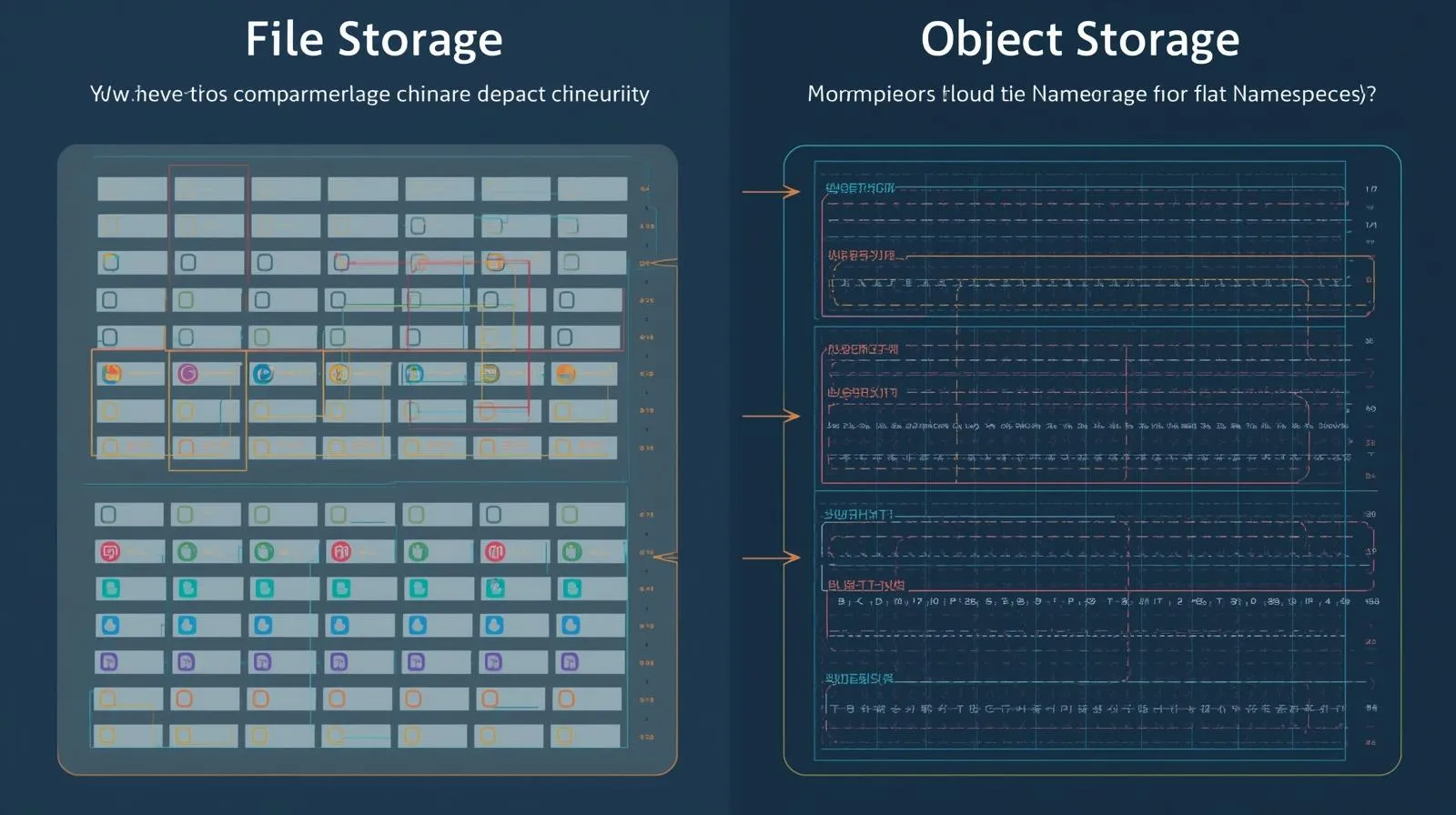
- Alt: "Diagram perbandingan arsitektur File Storage dengan hierarchical structure dan Object Storage dengan flat namespace - Cloud storage paradigms comparison"
Pengantar
Dalam ekosistem cloud computing modern, pemilihan storage architecture adalah keputusan fundamental yang berdampak pada performa aplikasi, skalabilitas sistem, dan efisiensi biaya operasional. Dua paradigma dominan—File Storage dan Object Storage—sering disalahpahami sebagai solusi yang interchangeable, padahal keduanya dirancang untuk menyelesaikan problem domains yang berbeda secara fundamental.
Kesalahan dalam memilih storage type dapat mengakibatkan performance bottlenecks yang sulit diperbaiki tanpa architectural refactoring. Menurut Gartner Infrastructure Report 2024, 45% dari performance issues dalam cloud applications berakar dari inappropriate storage selection yang tidak aligned dengan access patterns dan workload characteristics.
Artikel ini ditujukan untuk developer, system architects, dan DevOps engineers yang perlu memahami trade-offs antara File Storage dan Object Storage. Anda akan mempelajari perbedaan arsitektural, karakteristik performa, use case optimal untuk masing-masing paradigma, serta framework praktis untuk memilih solusi yang tepat.
Pembahasan akan mencakup fundamental architecture differences, deep dive ke access patterns dan protocols, perbandingan performa dan scalability, hingga real-world examples yang mengilustrasikan kapan menggunakan File Storage versus Object Storage untuk maximum efficiency.
Fundamental Architecture: Hierarchical vs Flat Namespace
Perbedaan paling mendasar antara File Storage dan Object Storage terletak pada bagaimana data diorganisasi dan diakses.
File Storage: Hierarchical File System
File Storage menggunakan traditional hierarchical structure yang familiar bagi semua developer—directories dan subdirectories yang membentuk tree structure. Ini adalah paradigma yang sama dengan file system di komputer lokal Anda: /home/user/documents/report.pdf.
Dalam cloud context, File Storage services seperti AWS EFS (Elastic File System), Azure Files, atau Google Filestore menyediakan network-attached storage yang bisa di-mount sebagai file system oleh multiple compute instances. Server atau containers Anda interact dengan storage seolah-olah itu adalah local disk.
File metadata tersimpan dalam directory structure itu sendiri. Ketika Anda mencari file, system harus traverse directory tree untuk menemukan lokasi file. Ini efficient untuk small-to-medium datasets tetapi menjadi bottleneck ketika dealing dengan millions atau billions of files.
File Storage supports POSIX-compliant operations seperti file locking, append operations, dan random read/write access. Anda bisa edit sebagian kecil dari file tanpa harus rewrite entire file—critical capability untuk databases dan applications yang memerlukan in-place updates.
Object Storage: Flat Namespace dengan Metadata
Object Storage menggunakan fundamentally different approach: flat namespace tanpa hierarchical directories. Data disimpan sebagai discrete objects dalam buckets atau containers. Setiap object memiliki unique identifier (key) dan accessed via HTTP/HTTPS APIs.
Meskipun Anda bisa simulate directory structure dengan naming conventions (misalnya images/2024/january/photo.jpg), ini purely cosmetic. Secara internal, tidak ada actual directory hierarchy—hanya flat collection of objects dengan keys.
Setiap object di Object Storage terdiri dari tiga components:
- Data: The actual file content
- Metadata: System metadata (creation date, size) dan custom metadata (tags, content-type)
- Unique Identifier: Global unique key dalam bucket
Object Storage platforms seperti AWS S3, Google Cloud Storage, atau Cloudflare R2 designed untuk massive scalability. Flat namespace eliminates bottlenecks yang inherent dalam hierarchical traversal, memungkinkan systems untuk scale ke trillions of objects tanpa performance degradation.
Namun, trade-off adalah immutability: Anda tidak bisa modify object in-place. Untuk update file, Anda harus upload entirely new version, replacing old object. Ini makes Object Storage unsuitable untuk workloads yang memerlukan frequent random writes atau append operations.
| Aspek | File Storage | Object Storage |
|---|---|---|
| Struktur | Hierarchical (directories) | Flat (buckets/keys) |
| Akses | File system mount (NFS, SMB) | HTTP/S API (REST) |
| Modifikasi | In-place updates supported | Immutable (full replacement) |
| Skalabilitas | Moderate (millions of files) | Extreme (trillions of objects) |
| Kompleksitas | Low (familiar paradigm) | Medium (requires API integration) |
Access Patterns dan Protocol Differences
Cara Anda access dan interact dengan data berbeda significantly antara kedua paradigms.
File Storage: Traditional Protocols
File Storage accessible via traditional network file system protocols:
NFS (Network File System): Dominant protocol untuk Linux/Unix environments. Applications access files seolah-olah stored locally tanpa code modifications. Commands seperti ls, cat, vim work normally.
SMB/CIFS (Server Message Block): Standard protocol untuk Windows environments. Seamless integration dengan Windows applications dan Active Directory authentication.
Performance Characteristics: File Storage optimized untuk low-latency, high-IOPS workloads. Typical latency untuk read/write operations dalam range 1-10ms. Ini critical untuk applications seperti databases atau real-time processing yang cannot tolerate high latency.
Concurrent access dari multiple clients fully supported dengan file locking mechanisms untuk maintain consistency. Sepuluh servers bisa simultaneously mount same file system dan safely read/write different files atau bahkan different parts of same file.
Object Storage: API-First Approach
Object Storage exclusively accessible via APIs, typically RESTful HTTP/HTTPS:
S3 API: De facto standard untuk Object Storage. AWS S3 API telah adopted widely—bahkan non-AWS platforms seperti Cloudflare R2, MinIO, atau Wasabi provide S3-compatible APIs.
Standard Operations:
PUT: Upload objectGET: Retrieve objectDELETE: Remove objectLIST: Enumerate objects in bucketHEAD: Get metadata without downloading content
Performance Profile: Object Storage optimized untuk throughput over latency. Typical first-byte latency 50-200ms—acceptable untuk bulk transfers tetapi problematic untuk latency-sensitive operations.
However, throughput capabilities exceptional: AWS S3 dapat handle 5,500+ GET requests per second per prefix, dan aggregate bandwidth bisa reach hundreds of gigabits per second untuk large-scale operations.
Object Storage tidak support concurrent writes ke same object. Last write wins—jika dua clients simultaneously upload ke same key, salah satu will overwrite the other without merge atau conflict resolution.
💡 Tips Pro: Untuk applications yang need file system semantics tetapi want object storage economics, consider solutions seperti JuiceFS atau s3fs-fuse yang provide FUSE-based file system interface on top of object storage. Performance akan lower than native file storage tetapi dapat work untuk certain use cases.
Performance, Scalability, dan Cost Implications
Understanding performance characteristics dan cost models essential untuk informed decision-making.
File Storage Performance Profile
Strengths:
- Low latency untuk small random reads/writes (1-10ms)
- Excellent untuk database workloads dan transactional systems
- High IOPS capabilities (AWS EFS bisa deliver 500,000+ IOPS)
- Concurrent access dengan strong consistency guarantees
Limitations:
- Limited scalability compared to object storage
- Performance degradation dengan extremely large directory trees
- Expensive untuk massive storage volumes
- Not optimized untuk large sequential transfers
Typical Costs: AWS EFS pricing sekitar $0.30/GB/month untuk standard storage—significantly more expensive than object storage. However, untuk workloads yang memerlukan file system semantics, this premium justified.
Object Storage Performance Profile
Strengths:
- Unlimited horizontal scalability
- Excellent throughput untuk large file transfers
- Extremely cost-effective untuk massive datasets
- Built-in durability (11 nines) dan availability
Limitations:
- Higher latency (50-200ms first-byte time)
- No in-place modifications
- API overhead untuk small file operations
- Eventual consistency untuk certain operations (though S3 now offers strong consistency)
Typical Costs: AWS S3 Standard storage hanya $0.023/GB/month—13x cheaper than EFS. Untuk petabyte-scale storage, difference becomes millions of dollars annually.
🔒 Keamanan: File Storage typically accessed within VPC dengan private network protocols, while Object Storage accessible via public internet (though dengan proper IAM controls). Evaluate security requirements ketika choosing between paradigms.
Use Case Analysis: Kapan Menggunakan Apa
Pemilihan antara File Storage dan Object Storage harus driven oleh workload characteristics.
File Storage: Optimal Use Cases
Shared Application Storage: Multiple application servers yang need shared access ke configuration files, uploaded user content, atau temporary processing files. File Storage memberikan consistency guarantees yang required.
Content Management Systems: WordPress, Drupal, atau CMS lain yang expect traditional file system untuk media uploads dan theme files. Meskipun bisa di-architect untuk object storage, native file system integration simpler.
Development and Build Environments: CI/CD pipelines, development containers, atau build systems benefit dari low-latency file access dan POSIX compatibility. Compilation processes yang heavily file I/O intensive perform significantly better dengan file storage.
Databases dan Structured Data: MySQL, PostgreSQL, atau databases lain require file system semantics untuk data files dan transaction logs. Object storage tidak suitable untuk OLTP database workloads.
Legacy Application Migration: Applications designed untuk on-premises environments dengan hardcoded file paths atau file system dependencies. File storage provides lift-and-shift migration path dengan minimal code changes.
Object Storage: Ideal Scenarios
Backup dan Archival: Long-term data retention, disaster recovery backups, atau compliance archives. Immutability feature actually advantage—prevents accidental modifications atau deletions (especially dengan Object Lock).
Static Website Hosting: HTML, CSS, JavaScript, images untuk static websites atau JAMstack applications. Object storage dengan CDN integration provides highly scalable dan cost-effective solution.
Media Storage dan Streaming: Video files, audio content, high-resolution images untuk content delivery. Large file sizes dan read-heavy access patterns perfect match untuk object storage capabilities.
Data Lakes dan Analytics: Big data workloads, machine learning datasets, atau log aggregation. Object storage's unlimited scalability dan cheap per-GB costs enable storing massive datasets yang would be prohibitively expensive di file storage.
Application Assets dan Binaries: Container images, software packages, firmware updates, atau any static content yang delivered to users. Version control naturally maps to object storage's immutable model.
IoT dan Sensor Data: Time-series data dari IoT devices atau sensor networks. Write-once, read-many access pattern aligns perfectly dengan object storage architecture.
| Use Case | File Storage | Object Storage |
|---|---|---|
| Shared App Files | ✅ Excellent | ❌ Not suitable |
| Database Storage | ✅ Required | ❌ Not suitable |
| Media Delivery | ⚠️ Works but expensive | ✅ Ideal |
| Backup/Archive | ⚠️ Possible but costly | ✅ Perfect fit |
| Static Websites | ⚠️ Overkill | ✅ Optimal |
| Big Data/Analytics | ❌ Limited scale | ✅ Designed for this |
Hybrid Approaches dan Modern Patterns
Increasingly, modern architectures leverage both paradigms untuk optimize performance dan cost.
Common Hybrid Patterns
Tiered Storage Strategy: Use file storage untuk hot data yang frequently accessed dan requires low latency. Implement lifecycle policies untuk automatically migrate cold data ke object storage setelah defined period. Ini common untuk log processing atau media workflows.
Application Separation: Run application code dan databases on file storage-backed systems, but store user-generated content, backups, dan static assets di object storage. This separates latency-sensitive workloads dari bulk storage needs.
Gateway Solutions: Products seperti AWS Storage Gateway atau third-party solutions provide file system interface yang backed by object storage. This enables legacy applications untuk benefit dari object storage economics tanpa code modifications, meskipun dengan performance trade-offs.
Processing Pipelines: Ingest data to object storage (cheap, scalable), process dengan compute instances yang use file storage untuk temporary working space, then output results back to object storage untuk long-term retention.
📊 Metrik: Monitor actual access patterns—frequency, concurrency, latency requirements—untuk optimize storage tier allocation. Tools seperti AWS S3 Storage Lens atau CloudWatch metrics provide insights untuk data-driven decisions.
Analisis Mendalam dan Rekomendasi Strategis
Evaluasi Pendekatan Saat Ini
Industry trend menunjukkan clear shift towards object storage untuk majority of new workloads, driven primarily oleh cost efficiency dan scalability advantages. However, file storage remains critical untuk workloads dengan specific requirements untuk POSIX semantics atau low-latency access.
Cloud-native applications increasingly designed with object storage as primary persistence layer, using file storage only where absolutely necessary. This "object-first" approach enables better scalability dan cost optimization dari early stages.
Rekomendasi Berdasarkan Skala
Untuk Skala Kecil (Startups/Small Projects):
- Start dengan object storage untuk static assets dan user content
- Use managed database services (RDS, Cloud SQL) yang abstract storage layer
- Only provision file storage jika specific application requires shared file system
Untuk Skala Menengah (Growing Applications):
- Implement hybrid strategy: file storage untuk applications, object storage untuk data
- Use CDN dengan object storage origin untuk content delivery
- Evaluate object storage untuk database backups dan disaster recovery
Untuk Skala Enterprise:
- Comprehensive tiered storage strategy across paradigms
- File storage untuk latency-critical transactional systems
- Object storage untuk analytics, archives, dan content delivery
- Automated lifecycle management untuk cost optimization
Kesalahan Umum yang Harus Dihindari
- Using File Storage untuk Everything: Defaulting to file storage karena familiarity leads to unnecessary costs dan scalability challenges untuk workloads yang better suited untuk object storage.
- Inappropriate Object Storage Usage: Attempting to use object storage untuk database files atau applications requiring file locking results dalam corruption atau performance issues.
- Ignoring Access Patterns: Not analyzing actual read/write frequencies, latency requirements, dan concurrency needs before choosing storage type.
- Over-Engineering Early: Implementing complex hybrid strategies before understanding actual requirements adds unnecessary complexity.
Kesimpulan
Ringkasan Poin-Poin Utama:
- Architecture fundamentally different: File Storage uses hierarchical directories dengan POSIX semantics, Object Storage uses flat namespace dengan API access—choose based on application requirements, not familiarity.
- Performance characteristics distinct: File Storage excels di low-latency random access, Object Storage optimized untuk high-throughput sequential operations dan massive scale.
- Cost models vary dramatically: Object Storage 10-15x cheaper per GB tetapi file storage necessary untuk workloads requiring file system semantics—evaluate total cost dengan performance requirements.
- Use cases largely non-overlapping: File Storage for databases, shared applications, legacy systems; Object Storage for media, backups, analytics, static content—hybrid approaches increasingly common.
- Migration complexity differs: Moving to object storage requires API integration dan application changes, while file storage offers easier lift-and-shift untuk legacy applications.
Manfaat Keseluruhan:
Dengan memahami fundamental differences antara Cloud File Storage dan Cloud Object Storage, Anda dapat make architectural decisions yang optimize untuk performance, scalability, dan cost efficiency. Choosing appropriate storage paradigm untuk each workload dapat reduce infrastructure costs hingga 80% sambil improving application performance dan enabling better scalability untuk future growth.
Referensi dan Sumber
- AWS Storage Services Documentation - https://docs.aws.amazon.com/storage/
- Google Cloud Storage Architecture - https://cloud.google.com/architecture/storage-overview
- Azure Storage Services Guide - https://docs.microsoft.com/azure/storage/
- Gartner Infrastructure and Operations Research - https://www.gartner.com/en/information-technology
- Cloud Storage Performance Benchmarking Studies - https://www.cloudwards.net/comparison/
Post Terbaru


 164x dibaca
162x dibaca
154x dibaca
22 Sep 2026
164x dibaca
162x dibaca
154x dibaca
22 Sep 2026
Podman vs Docker: Development dan Production
Post Terkait
 4 mnt baca
Membangun Frontend Vendor-Agnostic yang Tahan Perubahan
Artikel ini membahas pendekatan arsitektur frontend yang berfokus pada kontrak internal agar aplikasi web tetap stabil,...
29 Jan 2026
 5 mnt baca
Cara Membuat Localhost Jadi Online dengan Cloudflare Tunnel (Pakai Domain Sendiri)
Panduan praktis untuk mempublikasikan aplikasi yang berjalan di localhost (misalnya web app di port 3000/5173/8080) agar...
14 Jan 2026
 12 mnt baca
Cloudflare R2 vs AWS S3 vs Google Cloud Storage: Panduan Memilih Object Storage untuk Aplikasi Modern
Artikel ini membahas perbandingan mendalam antara Cloudflare R2, AWS S3, dan Google Cloud Storage sebagai solusi object...
14 Jan 2026